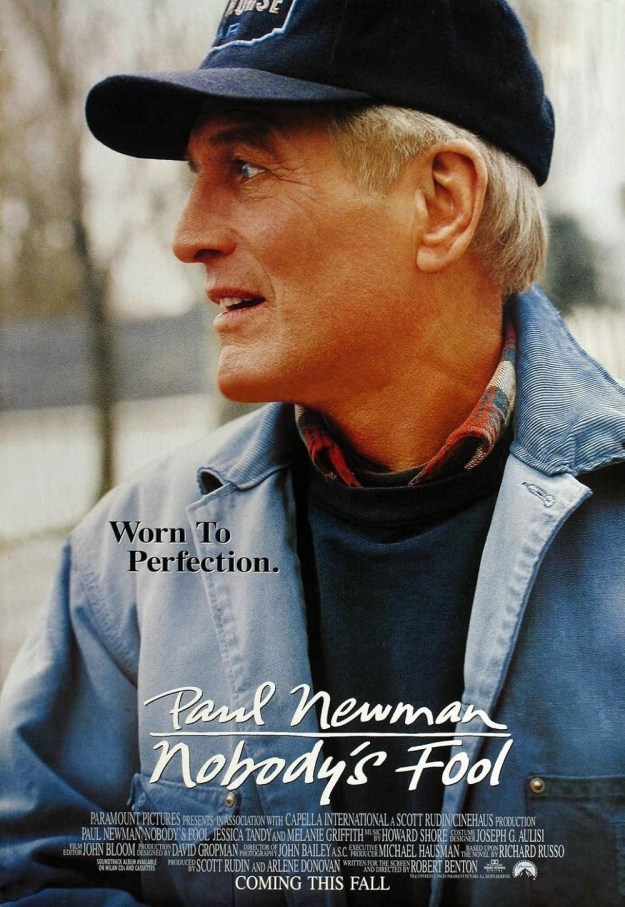
Movie poster for “Nobody’s Fool.” Image from Wikipedia entry on the film. Image courtesy of the film distributor.
On December 23rd, 1994, Paramount Pictures released the Robert Benton-directed film Nobody’s Fool. Benton wrote the screenplay from the novel of the same title by Richard Russo. Filming began on November 19th, 1993 in Beacon, Fishkill, Hudson, and Poughkeepsie, NY and ended on March 8th, 1994.
For a great “then and now” photo set of many of the filming locations, head to the Hudson Valley Ruins blog by Rob Yasinac and read his two-part series for a trip down memory lane.
As an avid wearer of classic Carhartt products over the years, I have been taking notice of Carhartt styles used for characters’ wardrobes in movies and television productions. When time allows, I assemble the information into a post such as this for the series, “Carhartt in the Movies and TV.”
Nobody’s Fool was memorable for many reasons, and for one well-known Carhartt product worn by the main character, Donald “Sully” Sullivan. Paul Newman, the actor who played the “Sully” part, was fitted with what is most commonly known as a “chore coat” manufactured by Carhartt.
In the movie, Donald “Sully” Sullivan wears the chore coat throughout the film. It has been beyond worn, lived, slept, and worked in. Sully embodies the now-classic look of the blue collar working man from the mid-1990s. As well, much of the imagery in the film evokes that long-ago era of the late 1980s, early 1990s blue-collar working class ambiance.
The film contains several scenes of Sully engaged in manual labor jobs, and the chore coat accompanies him in all aspects of his work. Likewise, some of the extras in the labor scenes also wear “brown duck” workwear.

Image from photograph of paused frame. Sully, center, and the labor extras.
The winter of 1993-1994, when the movie was filmed, was notable for the significant cold temperatures and snowfall across much of the eastern United States. In New York’s Hudson Valley, temperatures were severely cold, with lows down to 20 degrees below zero, and more than a dozen heavy snowstorms pummeling the region, which brought feet of snow during the long, old-fashioned winter.
It’s worth nothing, that through nearly all of the filming during that time, Paul Newman apparently remained relatively warm in the chore coat thanks to the several layers (see image below) he wore underneath the coat. No doubt, in between takes he may have donned an insulated coat or parka, or simply sought shelter inside a heated building. The chore coat was a lined coat; it was not insulated.*
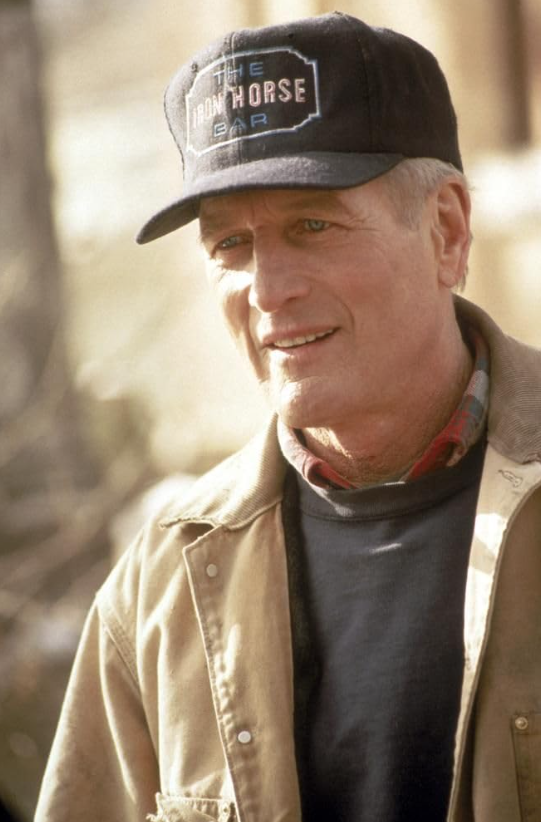
Image available on IMDB entry for the film. Note the layers of clothing. In some scenes, Newman adds a nylon-shelled puffer vest as an additional layer.
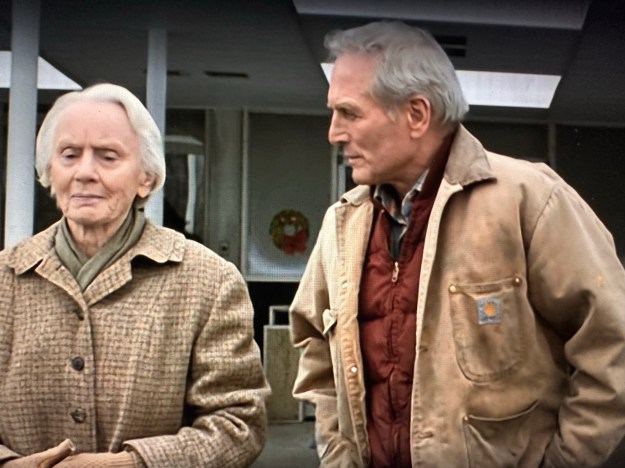
Jessica Tandy and Paul Newman. Photo of paused frame. Photo courtesy of Paramount Pictures. Newman donned a nylon-shelled puffer vest as an additional layer during the colder periods.
Specifically, Newman wore the Brown Duck Blanket-Lined Coat (6BLC). The lot number (commonly referred to as the “style code”) was color- and style-specific. From 1968 to 1999 customers could order a “6BLC” and receive exactly that. The long sized variant was 6BLCL until around 1981-1982, when “long” was replaced with “tall,” thus 6BLCT. Long/tall sizes added 2″ length to body and sleeves.
Lot number 6BLC is a bit intuitive compared to today’s 6-digit style numbers. We can “read” the lot number as follows:
6 – was the early color code for “Brown Duck.”
BL – Blanket-lined, indicating the lining fabric and type. The 6BLC was blanket-lined throughout.
C- Coat.
Carhartt made clear distinction between coats and jackets, even if the general public uses the terms interchangeably (and often technically incorrectly).
The story in the film is set in the 1990s (in the novel, 1980s). Newman’s chore coat is contemporary to both the time of the story and to the time of filming. The overall appearance of Newman’s chore coat lends itself to a broad production range of 1985 to 1990.
Beginning in 1997, Carhartt took to consolidating their lot numbers into style codes. The 6BLC became the C01, signifying it was the number one coat produced by Carhartt, and “6,” the old color code for “Brown Duck,” became “BRN” for “Carhartt Brown”. After all, by the time the C01 was packaged for shipping from the factory, that style in its then-current iteration–bi-swing back and corduroy trimmed collar–had been in production since 1954, with some minor detail and material changes.
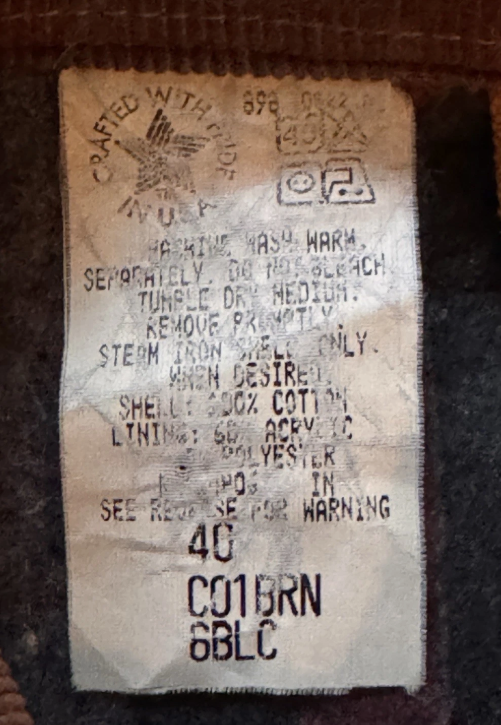
The style tag for the 6BLC/C01 during the transition period showing both the simplified style number and the old lot number. “898” is the date of manufacture. By late 1998 the old lot numbers were removed from the style tag. The C01 was sized numerically until the style was discontinued and replaced with the C001, which was labeled with alpha sizing.

1994 was the first year the style name “chore coat” was used. This screenshot, from the 1996 catalog, shows the use of the style name “chore coat,” along with the additional color options for the firm duck coat styles.
With simplified style codes came simplified style names. Metaphorically, that change also signaled the beginning of the end of “brown duck” as common workwear. Workwear today is mostly cheap petroleum products bordering on fast fashion trash and accompanied by intrusive advertising. This change in workwear can also signify the change in labor–it isn’t as physical as it was and the future of labor remains murky.
As of 2024, Carhartt no longer makes a blanket-lined chore coat. Carhartt was one of the last holdouts offering firm duck workwear long after many legacy brands abandoned such styles in favor of lighter weight duck canvas with a higher petroleum content. Discontinuing the production of the chore coat style, long a mainstay in Carhartt’s traditional workwear lineup, signaled the end of an era for traditional duck canvas workwear.
* The direct replacement styles to the 6BLC received a manufacturing change during the 2003-2004 style-wide changes. In addition to the change from blanket-lined sleeves to taffeta nylon quilted to midweight polyester insulation in the sleeves, all styles during this time received sizing adjustments. The later C01 (2003-2011) was the first firm duck chore coat to have quilt-lined sleeves (the early C01 from 1997 to 2002 had blanket-lined sleeves). The succeeding (and final replacement) style–the C001 (2011-2019)–followed the same pattern. The body of the coat remained blanket-lined.

 The Roaming Ecologist