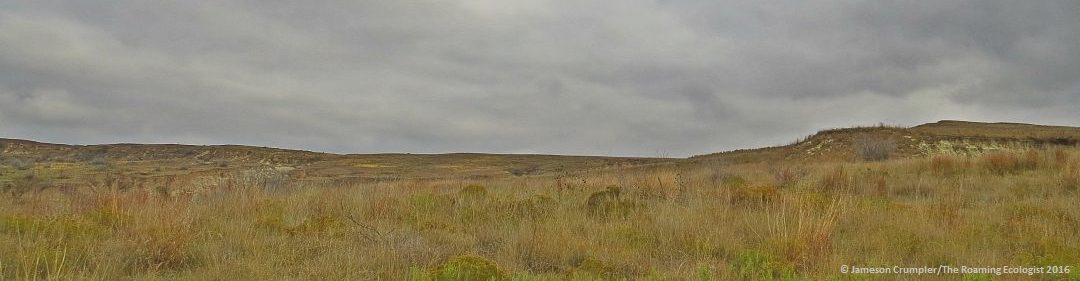
In some places, the old grasslands hold our secrets. And there are places like these, hidden among long rolling stretches of land, that showed the military might of the United States and reminds us how close we came to widespread destruction at one minute to midnight in 1962.
 A historical marker stands on the Chimney Creek Ranch describing one of the many hardline communications pits installed in the Abilene, Texas region during the Cold War, part of the Atlas F Intercontinental Ballistic Missile System communications hardware. The Atlas F missile contained a 4.5 megaton nuclear warhead. 12 such missiles were installed around Dyess Air Force Base.
For hundreds of years, grasslands have been man’s technological and military proving grounds. From the major transition of bow and arrow to rifle and horse, to the first atomic bomb testing on the arid high plains of eastern New Mexico under the conflicted mind of Robert J. Oppenheimer, to the grain silo intercontinental ballistic missile launch sites pock-marking the Great Plains at the frenzied height of the nuclear arms race during the Cold War, the wide open landscapes of a former graminoid empire have provided vision and inspiration for those allied with one side or the other, (or both).
In the bipolar race, struggle, and clandestine and overt fights between the United States and the former Soviet Union, the grasslands served as the most valiant patriot and the most trusted of comrades. No grassland has ever defected, invaded without declaration, nor displayed questionable loyalty. Once rooted, grassland tends to stay, unless quickly removed by some myopic action of man.
And for such steadfastness, the grasslands paid a high price, as they continue to do today, earning the sad status as the single most threated biome in the world.
Many of these missile silos remain active throughout the Great Plains. The Air Force is currently severely struggling with upgrading its next-generation ICBM program, “a total system replacement of the intercontinental ballistic missile system’s 400 missiles, 450 silos, and more than 600 facilities over a 31,900 square mile landmass”, at a life-cycle cost to taxpayers of more than $264 billion dollars.
$264 billion. That amount of money could preserve and restore extensive portions of the North American grassland biome, which has lost more than 50 million acres in the last 10 years, 1.6 million of those acres were lost in 2021 alone. The loss continues today.
 The Roaming Ecologist